
By Admin | October 27, 2026
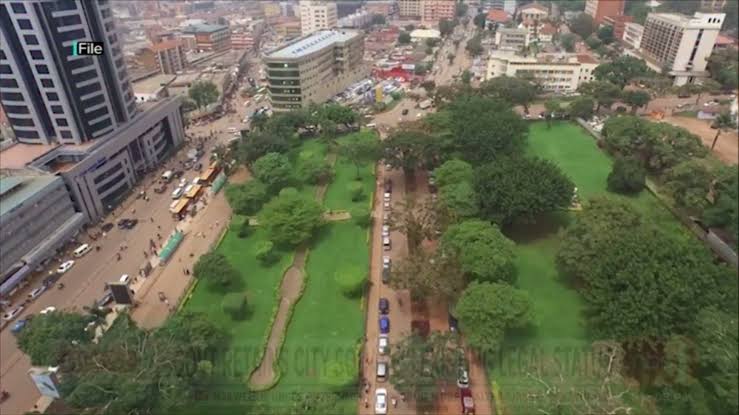
KAMPALA, Uganda — One of Kampala’s most historically significant public spaces has been spared a proposed redevelopment after Cabinet reversed plans to transform City Square, formally known as Constitution Square, and resolved to retain its existing legal status.
The decision brings a measure of clarity to a debate that has placed urban development, public space, environmental protection and national heritage at the centre of discussions about Kampala’s future.
Announcing the decision on Tuesday, October 27, Minister of ICT and National Guidance Ruth Nankabirwa Kasule Lumumba said Cabinet had considered the site’s historical significance, legal protection, and the environmental and urban planning concerns surrounding the proposal.
Constitution Square is a protected heritage site whose legal protection dates back to 2007. Its status is recognised under the Museums and Monuments Act, 2023, and a heritage protection instrument issued in 2024.
The protected area covers approximately 1.172 hectares, comprising plots 5, 6 and 7. It also houses the 1945 War Memorial, which commemorates Ugandan soldiers who lost their lives during the First and Second World Wars.
For Kampala, the decision is about more than the fate of a piece of land in the central business district. It concerns a public space that has acquired historical, civic and constitutional significance over more than a century.
FROM GOVERNMENT SQUARE TO CONSTITUTION SQUARE
The story of City Square dates back to the early 1900s, when the colonial administration set aside the area as Government Square as Kampala developed into an administrative centre.
The space formed part of the city’s public landscape at a time when Kampala was expanding beyond its older administrative and commercial settlements.
Over the decades, the square became a familiar landmark in the capital. Its open character distinguished it from the surrounding concentration of offices, commercial buildings and busy roads.
The site later acquired an additional layer of historical importance through its association with Uganda’s constitutional journey.
In 1995, following the promulgation of Uganda’s Constitution, City Square was renamed Constitution Square. The name connected the public space to a defining moment in the country’s political and constitutional history.
That legacy has helped make the square more than a convenient open area in the city centre. It is a place associated with public life, national identity and the evolution of Uganda’s institutions.
A MEMORIAL TO UGANDAN SOLDIERS
One of the site’s most important features is the 1945 War Memorial.
The memorial commemorates Ugandan soldiers who died during the two World Wars, linking the square to a difficult chapter in the country’s history.
Although Uganda was under British colonial rule during both conflicts, Ugandans served in military formations and campaigns associated with the wars. Their experiences and sacrifices form part of the country’s broader historical record.
The memorial provides a physical reminder of those lives and of Uganda’s connections to global events that shaped the twentieth century.
Its presence also underscores why decisions affecting the square must account for the historical features already on the site.
Under the existing heritage protection framework, Constitution Square’s significance is not simply a matter of public sentiment. It is also recognised through formal legal protections.
HOW THE REDEVELOPMENT PROPOSAL EMERGED
The latest controversy followed a proposal by businessman Hassan Bulwadda to transform approximately two acres at City Square into a modern, solar-powered commercial complex.
The proposed development included a hotel, shopping facilities and other commercial spaces. Its proponents presented it as an opportunity to modernise the area while incorporating green technology.
On August 30, 2026, President Yoweri Museveni directed the Minister for Kampala Capital City and Metropolitan Affairs, Minsa Kabanda, to examine the proposal in consultation with the Kampala Capital City Authority (KCCA) and report back.
The directive initiated a government review rather than, by itself, constituting final approval for the development.
The proposal quickly attracted public and political attention, particularly over whether commercial redevelopment was compatible with the square’s protected status and its role as an open public space.
Kampala Lord Mayor Ronald Balimwezo opposed the plan, arguing that the city needed to safeguard its remaining open spaces for environmental protection, recreation and emergency use.
The matter also reached Parliament, where concerns were raised about the implications of redeveloping one of the capital’s prominent public spaces.
On September 30, State Minister for Trade, Industry and Cooperatives David Bahati told Parliament that the presidential communication had been referred to relevant ministers and technical teams for examination.
The debate subsequently expanded to include questions about the site’s ownership, previous redevelopment arrangements and the appropriate balance between investment and public interest.
A PREVIOUS DEVELOPMENT DISPUTE
The current proposal is not the first attempt to redevelop City Square.
In 2001, businessman Hassan Basajjabalaba told Parliament’s Committee on Commissions, Statutory Authorities and State Enterprises that his company, HABA Group, had won a tender to redevelop the site and paid the then Kampala City Council a premium of Shs1.6 billion.
He later pursued compensation following the cancellation of the arrangement, bringing a separate dimension to the continuing dispute over the property’s development history.
The earlier controversy illustrates how City Square has repeatedly become a point of contention involving commercial interests, public land and the city’s long-term planning priorities.
However, the latest Cabinet decision addresses the current redevelopment proposal and the site’s existing legal status. It should not be interpreted as resolving every separate historical or compensation claim associated with the property.
WHY THE DECISION MATTERS
Kampala continues to face pressure from population growth, commercial expansion, traffic congestion and competing demands for land.
Within that environment, open public spaces serve several purposes. They provide room for people to gather, offer opportunities for recreation and contribute to the character of the urban landscape.
Green spaces can also support urban environmental management, although their actual contribution depends on their design, vegetation, maintenance and surrounding conditions.
For heritage sites such as Constitution Square, these considerations intersect with the responsibility to preserve historical landmarks for future generations.
The central question raised by the redevelopment debate was therefore not simply whether a modern commercial complex could be constructed, but whether the proposed transformation was compatible with the site’s protected status and public significance.
By reversing the proposal, Cabinet has opted to retain the square’s existing legal status rather than proceed with the development plan under consideration.
The decision reinforces the need for future proposals involving protected public sites to take account of the applicable law, historical value and wider urban planning considerations.
WHAT HAPPENS NEXT?
For now, the government’s position is clear: the proposed redevelopment has been reversed, and Constitution Square will retain its existing legal status.
The announcement does not, on its own, establish what additional conservation, landscaping or public-space improvements may be undertaken at the site. Nor does it provide a detailed implementation plan for the square’s future management.
Those questions remain relevant to the broader discussion about how Kampala can preserve its heritage while responding to the needs of a growing city.
For residents, visitors and future generations, Constitution Square represents a connection between Kampala’s past and its present.
Its history stretches from the colonial-era Government Square through Uganda’s constitutional transition to the modern capital. Its war memorial preserves the memory of Ugandans who died in global conflicts, while its protected status provides a legal basis for safeguarding that heritage.
Cabinet’s decision settles the immediate question over the current development proposal: Constitution Square will retain its existing legal status. The longer-term challenge is to ensure that this historic public space is appropriately protected, maintained and managed for the benefit of the public.
ECO NEWS — Stories That Count. Perspective. Impact.