
By Ninze Arthur
16 September 2026
For generations, Zoka Forest has stood as one of northern Uganda’s most important natural ecosystems, a dense tropical forest in Adjumani District that has provided habitat for wildlife, protected water resources and supported the livelihoods and cultural heritage of surrounding communities.
Today, however, the forest is facing one of its most serious threats yet.
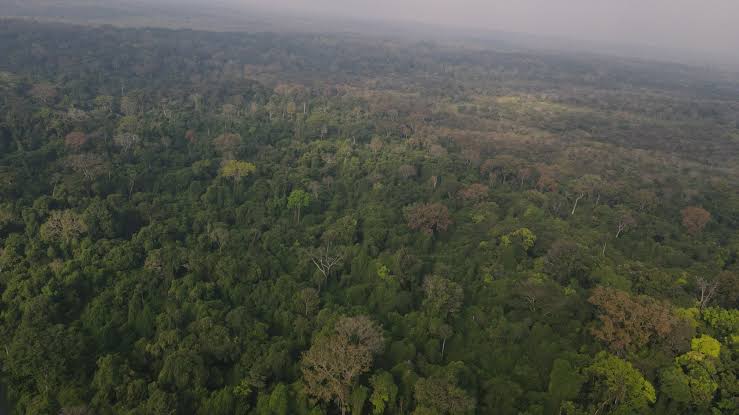
The alarm was renewed this week after President Yoweri Museveni, while in Adjumani District, expressed concern over the dramatic loss of forest cover. Looking at Zoka from the air, the President questioned what had happened to the once conspicuous green landscape, amid reports of extensive encroachment, charcoal burning, illegal logging and settlement inside the protected area. (Monitor)
The concern is not new. But the changing landscape has brought renewed attention to a forest that conservationists have warned for years is being steadily degraded.
A FOREST WITH A LONG HISTORY
Zoka was gazetted as a Central Forest Reserve in 1948. Historical records put the original reserve at about 6,145 hectares, although the remaining natural forest is now generally described as approximately 1,259 hectares. The National Forestry Authority identifies Zoka as the only natural forest resource in Adjumani District. (The Observer Media Ltd)
Its significance extends beyond its size.
Zoka is a tropical natural forest and an important ecological system within the wider landscape of northern Uganda. Its vegetation helps regulate water flows, supports soil stability and provides habitat for numerous plant and animal species.
Conservation organisations have documented species including the endangered Afzelia africana, a valuable indigenous hardwood that has become a target for illegal timber extraction. (IUCN)
The forest also sits within a wider wildlife landscape connected to the East Madi area, giving it significance beyond its immediate boundaries.
FROM FOREST TO FRAGMENTED LANDSCAPE
For years, conservationists and local activists have warned that Zoka is being eaten away from the edges and, increasingly, from within.
Illegal logging, charcoal production, agricultural expansion and human settlement have contributed to the degradation.
A recent fact-finding visit by Parliament’s Committee on Environment and Natural Resources reportedly found extensive human activity inside the reserve, including logging, charcoal burning, farming and settlements. Makeshift camps associated with illegal loggers and charcoal dealers were also reportedly observed. (Monitor)
Adjumani District Council has since called for urgent measures, including the eviction of illegal encroachers, clear marking of the forest boundaries and stronger enforcement of forestry laws.
The district has also called for greater coordination between government agencies, local leaders, cultural institutions and communities.
For conservationists, the challenge is no longer simply stopping individual loggers. It is about protecting an entire ecosystem from a combination of economic pressures, weak enforcement and expanding human activity.
THE TREES THAT CARRY ZOKA’S FUTURE
Among the forest’s ecological treasures are indigenous hardwoods such as Afzelia africana, alongside other valuable species.
The disappearance of mature indigenous trees has consequences that extend far beyond the loss of timber.
Large trees store carbon, provide food and shelter for wildlife, protect soils and contribute to the forest’s ability to regulate water. Once mature trees are removed, replacing the ecological functions they performed can take decades.
Uganda’s wider experience with the disappearance of indigenous hardwoods such as Mvule offers a warning. Mature indigenous trees grow slowly, while demand for timber and charcoal can remove them much faster than natural regeneration can replace them. (Monitor)
ZOKA’S WILD COFFEE OFFERS ANOTHER STORY
Yet Zoka is not only a story of loss.
Deep within the forest grows a rare wild coffee variety, Excelsa coffee, which local communities have known for generations.
In 2026, Adjumani District Council formally recognised the coffee as Zoka Coffee, linking the product to the forest and its cultural heritage. Conservationists see the recognition as an opportunity to create economic value around keeping the forest standing rather than cutting it down.
This presents an important conservation question: can communities derive sustainable economic benefits from Zoka without destroying the ecosystem that makes those benefits possible?
Forest-based enterprises, ecotourism, sustainable coffee value chains, research and community conservation could form part of that conversation.
THE HUMAN DIMENSION
Behind the destruction are also people and livelihoods.
Communities around Zoka depend on land and natural resources, while illegal timber and charcoal markets create financial incentives for extraction.
That makes conservation more complicated than simply drawing a boundary and ordering people out.
The law protects the reserve, but lasting conservation also requires practical alternatives for communities, effective enforcement and accountability for those who finance or facilitate illegal extraction.
The history of Zoka’s conservation movement illustrates this complexity.
Friends of Zoka, a community-based conservation initiative, has for years worked to protect the forest and raise awareness about illegal exploitation. Conservation advocates have repeatedly called for stronger enforcement and protection of the reserve. (IUCN)
A NATIONAL TEST FOR FOREST PROTECTION
Zoka is small compared with Uganda’s largest forests, but its ecological value is significant.
Its continued decline raises broader questions about how Uganda protects Central Forest Reserves, particularly where protected forests sit alongside communities facing economic and land pressures.
The National Forestry Authority is mandated to manage Uganda’s Central Forest Reserves, while effective conservation also requires cooperation with district authorities, communities, security agencies, environmental organisations and other stakeholders. (NFA Uganda)
The latest attention on Zoka therefore presents an opportunity to move beyond repeated warnings.
Clear boundaries, transparent enforcement, restoration of degraded areas, community participation and sustainable livelihood opportunities will all be important if the remaining forest is to survive.
WHAT HAPPENS NEXT?
The question now is whether the latest political and public attention will translate into sustained action.
Zoka has survived for generations. Its remaining forest still holds biodiversity, water, carbon, cultural value and economic possibilities.
But a forest cannot be protected by declarations alone.
The challenge is to ensure that the green landscape seen by future generations is not merely a memory captured in old photographs or remembered from the sky.
For northern Uganda, saving Zoka is not simply about saving trees.
It is about protecting an ecosystem, a natural heritage and the possibilities that can grow from keeping a forest alive.