

Econews.digital | Editorial
In the highlands of Elgeyo Marakwet County, where forests are both lifelines and fragile frontiers, an extraordinary act of environmental commitment has sparked both admiration and concern.
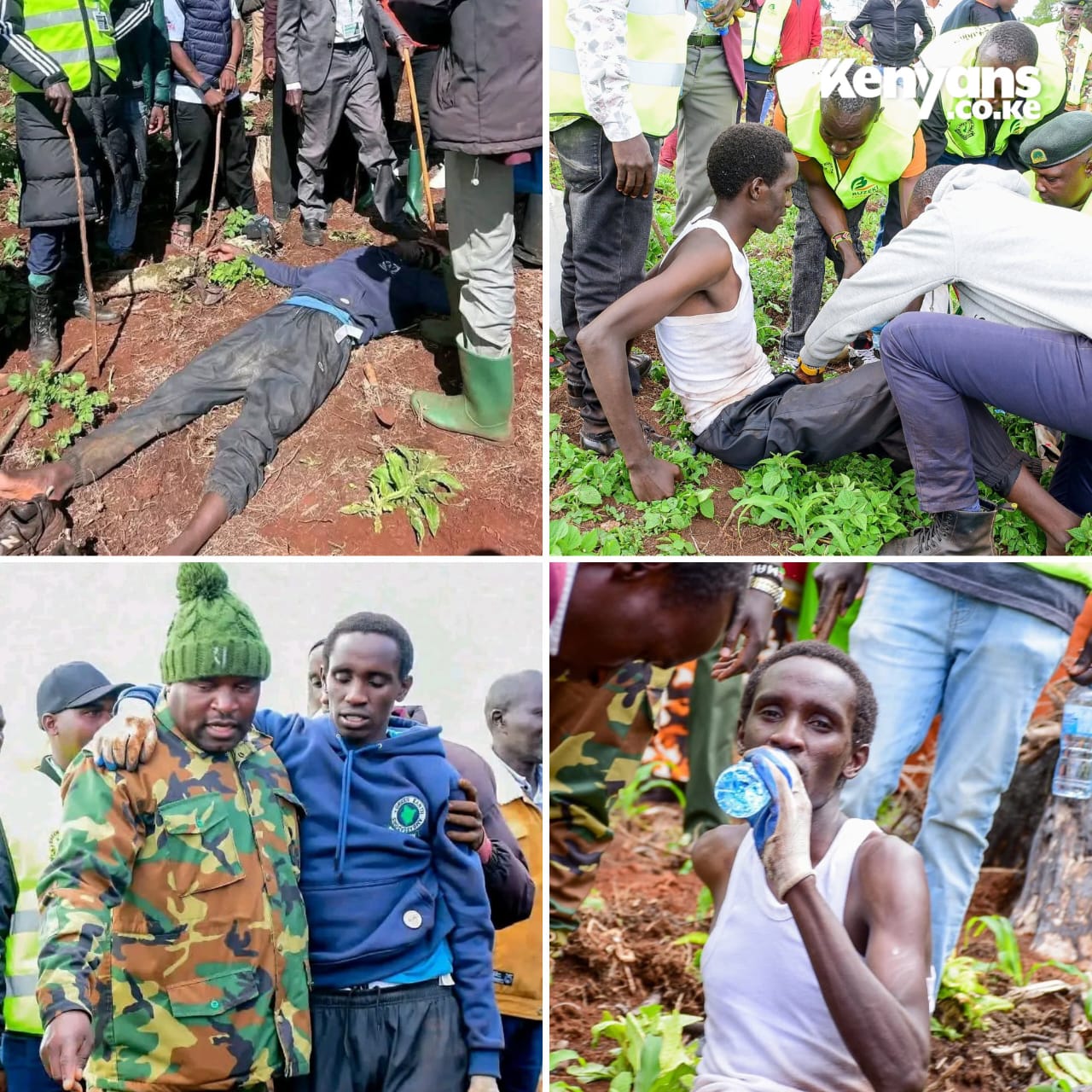
On April 23, 2026, Kenyan environmentalist Hillary “Buzeki” Kibiwott set out to break a global record—planting the highest number of trees within 24 hours. By the end of the grueling effort at Kessup Forest Station, he had planted 23,326 trees, surpassing the previous benchmark of 23,060 set in Canada in 2021.
Moments later, his body gave in.
Kibiwott collapsed from exhaustion and was rushed to hospital—turning what should have been a moment of triumph into a sobering reflection on the cost of environmental action.


Caption: Kenyan environmentalist Hillary “Buzeki” Kibiwott during his record-breaking tree planting effort in Elgeyo Marakwet County before collapsing from exhaustion.
A RECORD, AND A REALITY CHECK
Planting over 23,000 trees in a single day is a feat of discipline, coordination, and extreme endurance. It reflects both personal commitment and the growing urgency to restore degraded forests across East Africa. But this moment also raises a difficult question:
should environmental action come at such a physical cost?
WHEN ACTION BECOMES STRAIN
Kibiwott’s collapse is not just an isolated incident; it reflects a broader pattern where environmental action is increasingly driven by individual endurance rather than collective systems.
Across Kenya, symbolic and high-intensity activism has been gaining ground. In December 2025, Truphena Muthoni drew attention with a 72-hour tree-hugging record, reflecting a growing movement that blends awareness with physical commitment.
But behind these moments lies a quieter reality—fatigue, risk, and human limits.
BEYOND THE NUMBERS
Tree planting is often presented as a numbers game—but sustainability tells a different story.
The real measure of impact lies in:
- Survival and growth of trees
- Use of indigenous species
- Long-term ecosystem balance
- Community ownership and protection
A forest is not built in a day. It is grown, protected, and sustained over time.
Kibiwott’s achievement is remarkable, but it also highlights a gap: the need to move from individual milestones to structured, long-term restoration systems.
THE SYSTEMS WE NEED
Sustainability cannot rely on endurance alone. It must be built on systems that are:
- Community-driven
- Institutionally supported
- Policy-backed
- Safe for those on the frontlines
Because restoration at scale requires more than effort—it requires structure, protection, and continuity.
EDITORIAL REFLECTION
Hillary “Buzeki” Kibiwott’s story is both inspiring and instructive.
It celebrates courage, but also quietly warns against a future where environmental progress is built on individual strain rather than collective strength.
Because while passion can plant thousands of trees,
it is systems that grow forests, and protect the people behind them.
Econews.digital Editorial Desk