
COMMUNITY-LED CONSERVATION TURNS ENVIRONMENTAL STEWARDSHIP INTO SUSTAINABLE INCOME
By Drake Nyamugabwa
April 22, 2026
In a bold shift toward building sustainable and climate-resilient economies, smallholder tree farmers in Western Uganda are emerging as key players in a growing green economy, leveraging nature credits to restore ecosystems while generating income.
At the heart of this transformation is a community-first approach, where farmers are not just participants but active designers of restoration strategies that reflect their needs, realities, and long-term aspirations.
Nature credits, closely linked to carbon trading, are redefining conservation. Carbon trade, also known as emissions trading, is a market-based system that allows countries and organisations to buy and sell carbon credits. A carbon credit represents one tonne of greenhouse gas emissions avoided, reduced, or removed from the environment, creating measurable environmental value that can be traded for revenue.
Through activities such as agroforestry, forest restoration, and sustainable land management, communities are restoring degraded landscapes while improving household livelihoods. These conservation outcomes are assessed through both scientific and community-led methods and are then converted into tradable nature credits.
WOMEN-LED INITIATIVES DRIVING GREEN ENTERPRISE
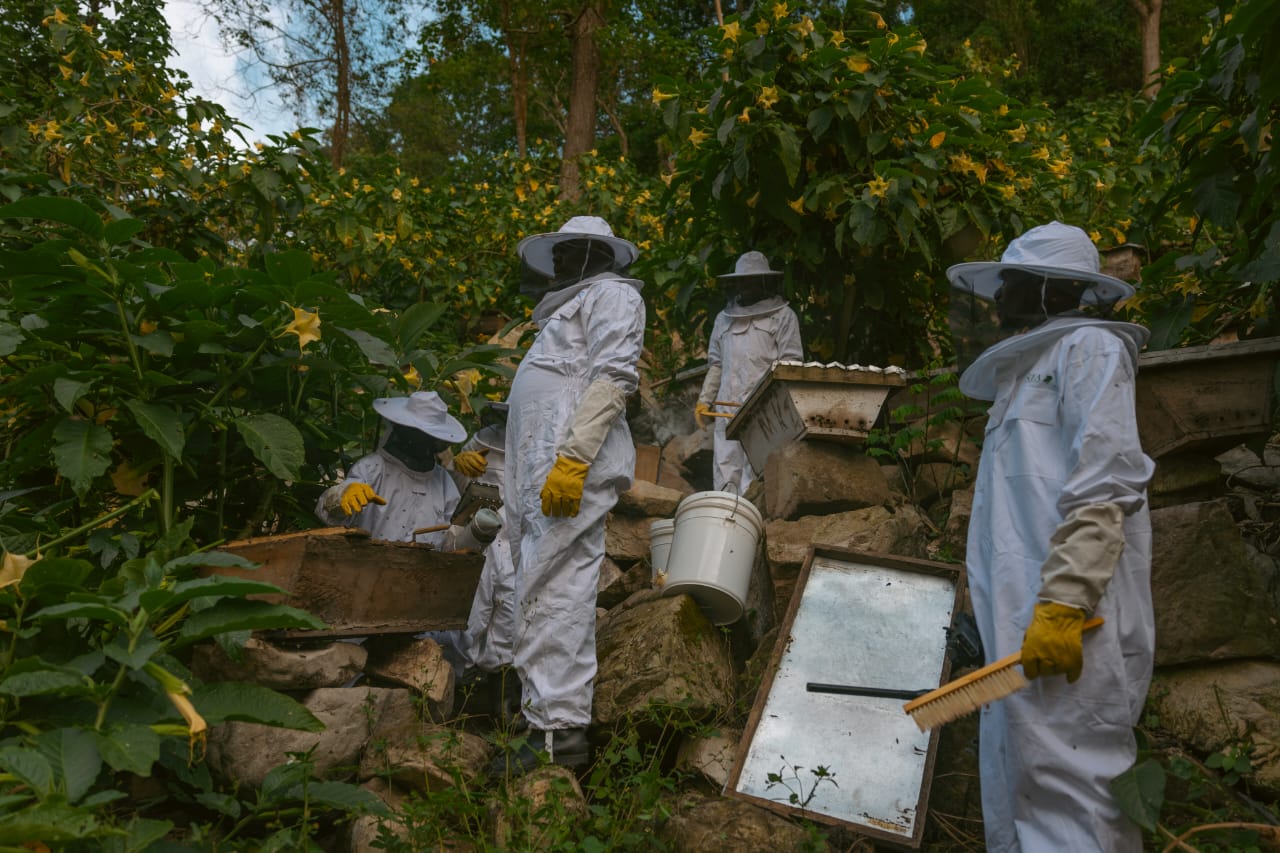
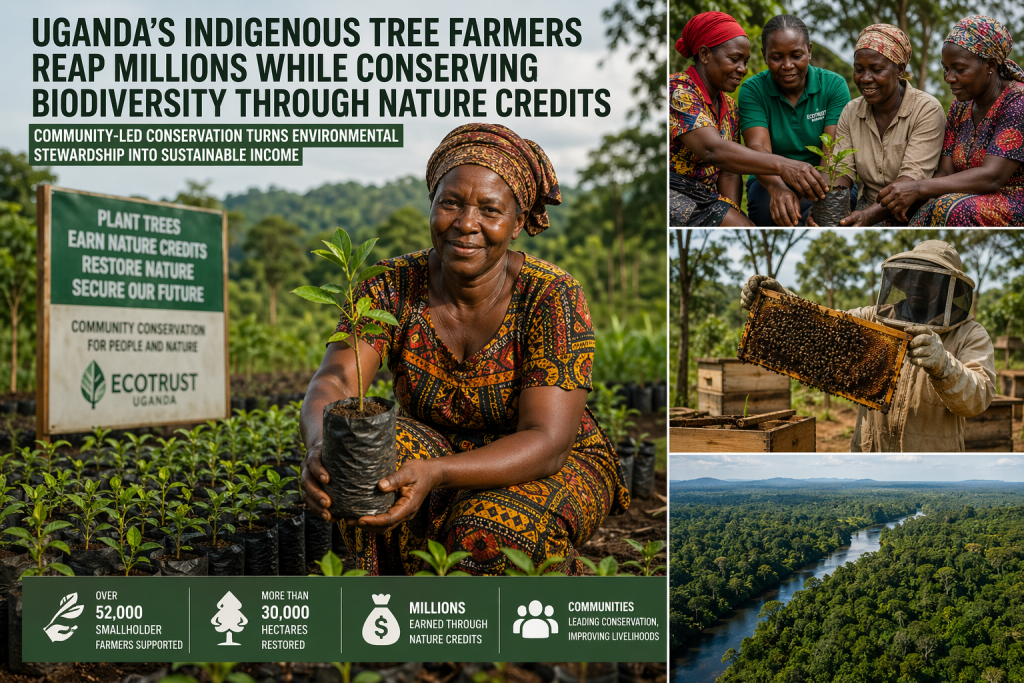
Among the standout community groups is the Wambabya Tree Nature Women’s Group based in Kidoma Sub-county, Kikuube District. The group has embraced a diversified model of green enterprise, engaging in activities such as beekeeping, herbal medicine, crafts, and tree nursery development.
These initiatives promote the sustainable use of non-timber forest products while creating alternative income streams — significantly reducing pressure on fragile ecosystems such as the Wambabya and Bugoma Central Forest Reserves.
COMMUNITY POWER AT THE CORE OF CONSERVATION
Organizations supporting these initiatives emphasize that long-term success depends on community ownership.
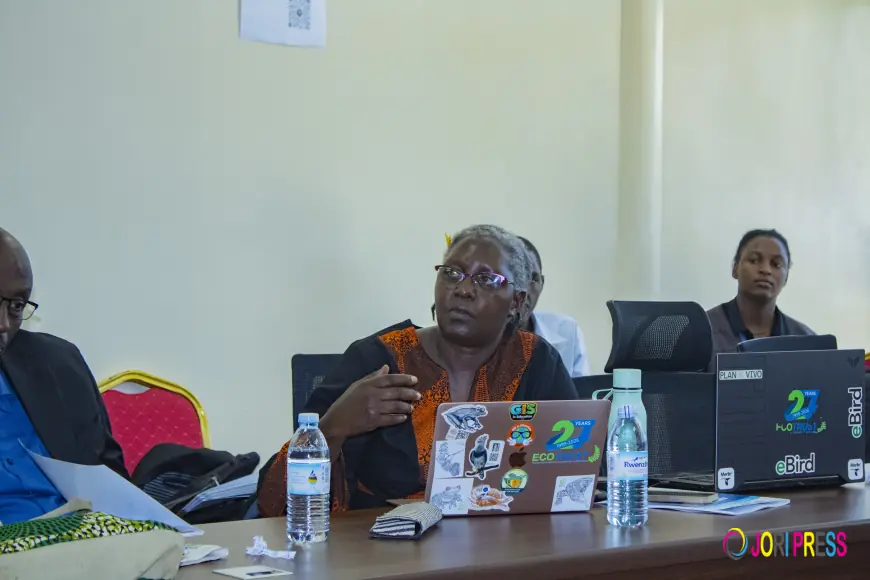
In an interview, Pauline Nantongo, Executive Director of ECOTRUST, underscored the importance of inclusive approaches:
“Nature credits show that conservation can benefit both people and the environment when communities are fully involved and empowered,” she said.
She further highlighted the organization’s model:
“Our experience shows that when conservation is linked to real economic value, communities take the lead in protecting biodiversity and ensuring long-term sustainability,” Pauline noted.
This model blends indigenous knowledge, innovation, and partnerships — ensuring that conservation is not imposed, but co-created.
SCALING IMPACT: THOUSANDS OF FARMERS, THOUSANDS OF HECTARES
According to Jonathan Odongo, a Biodiversity Programme Officer, nature credits are not only protecting ecosystems but also reshaping rural economies.
“Nature credits are financial tools that reward individuals and communities for protecting biodiversity and delivering positive environmental outcomes,” he said.
He emphasized that the approach is deeply participatory:
“So far, this approach has supported over 52,000 smallholder farmers and restored more than 30,000 hectares with additional work in forest reserves,” Jonathan added.
This scale of impact highlights a growing shift — where conservation is no longer viewed as a cost, but as an economic opportunity.
FROM SUBSISTENCE TO SUSTAINABILITY: A FARMER’S JOURNEY
For farmers like Beatrice Ahimbisibwe from Hoima, the transformation has been both economic and personal.
After witnessing fellow farmers earn millions from carbon credits, she ventured into indigenous tree farming in 2003 — a decision that would redefine her livelihood.
“I embarked on different indigenous tree species including Tanaria, Prynas, Fagara, and Ficas. These are some of the species recommended for carbon credits. I started growing indigenous trees in 2003, but after a few years I started selling carbon credit and I can now have a sustainable family and I have a decent home. People are coming from different places to see how we able to do it” she says
Her journey reflects the patience required in tree farming — but also the long-term rewards.
“I was a subsistence farmer before I dedicated my time to a tree farming project and started planting native and naturalized trees on my piece of land which eventually after being patient for a few years yielded through sequencing carbon dioxide, while the trees also helped curb soil erosion and keep waterways free from siltation,” she said
Today, her work stands as a model of how environmental stewardship can directly translate into financial stability and improved quality of life.
A NEW ECONOMY ROOTED IN NATURE
Uganda’s emerging nature credit ecosystem is proving that conservation and economic development are not mutually exclusive. Instead, they are deeply interconnected.
By placing communities at the center, aligning environmental goals with economic incentives, and investing in indigenous knowledge systems, the country is quietly building a model for climate resilience that could be replicated across the continent.
What was once seen as preservation is now becoming production — not of goods alone, but of value, sustainability, and future security.