
BY ECONEWS EDITORIAL | JANUARY 22, 2026
Greenland, the world’s largest island and one of the planet’s most fragile climate zones, has once again been thrust into global headlines, not because of science, but because of power.
Recent remarks by Donald Trump, reviving interest in Greenland as a strategic and economic asset, have triggered fresh controversy at a time when the Arctic is warming faster than any other region on Earth. What appears on the surface as a geopolitical dispute is, at its core, a sustainability crisis colliding with global ambition.
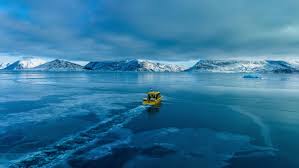
As Arctic ice melts at record speed, Greenland has become a symbol of the climate paradox. The same warming that threatens coastal cities worldwide is exposing shipping routes, rare earth minerals, and untapped natural resources beneath the ice. These resources are critical for the global green transition, powering batteries, wind turbines, and electric vehicles. Yet extracting them risks accelerating environmental damage in one of the world’s most sensitive ecosystems.
The renewed rhetoric has alarmed European leaders and climate advocates alike. Greenland is not just a strategic outpost. It is a climate barometer for the planet. Scientists warn that accelerated ice loss from Greenland could significantly raise global sea levels, threatening millions across Africa, Asia, and low-lying island states. Turning the island into a bargaining chip for geopolitical leverage undermines decades of climate research and environmental protection efforts.
The controversy also exposes a deeper tension within the global sustainability agenda. While world leaders gather in forums like World Economic Forum to champion climate action, real-world decisions continue to prioritise power, control, and resource security over environmental stewardship. Greenland sits at the intersection of these contradictions.
For Indigenous communities in Greenland, the debate is not abstract. It is about sovereignty, land rights, and survival. Climate change is already reshaping livelihoods through unpredictable weather, melting permafrost, and ecosystem disruption. Large-scale extraction projects, driven by external interests, risk compounding these challenges without guaranteeing local benefit.
From a sustainability lens, the Greenland debate raises urgent questions. Can the world pursue a green transition without sacrificing ecological frontiers? Can climate solutions be built on extractive models that mirror the very systems driving environmental collapse? And who gets to decide the future of territories most affected by climate change?
What is unfolding in Greenland is not just a political controversy. It is a warning. Climate change is no longer only an environmental issue. It is a driver of global competition, inequality, and instability. How the world responds will shape not just Arctic futures, but the credibility of global sustainability commitments.
For Africa and the Global South, the lesson is clear. Decisions made in distant capitals can have cascading impacts on global climate systems, food security, and economic resilience. Sustainability cannot be selective. It cannot protect some regions while exploiting others.
Greenland’s ice may be melting, but what is truly eroding is the illusion that climate action and geopolitics can be separated. The Arctic is now a climate battleground, and the choices made there will echo far beyond its frozen shores.