
By Editorial | EcoNews.Digital
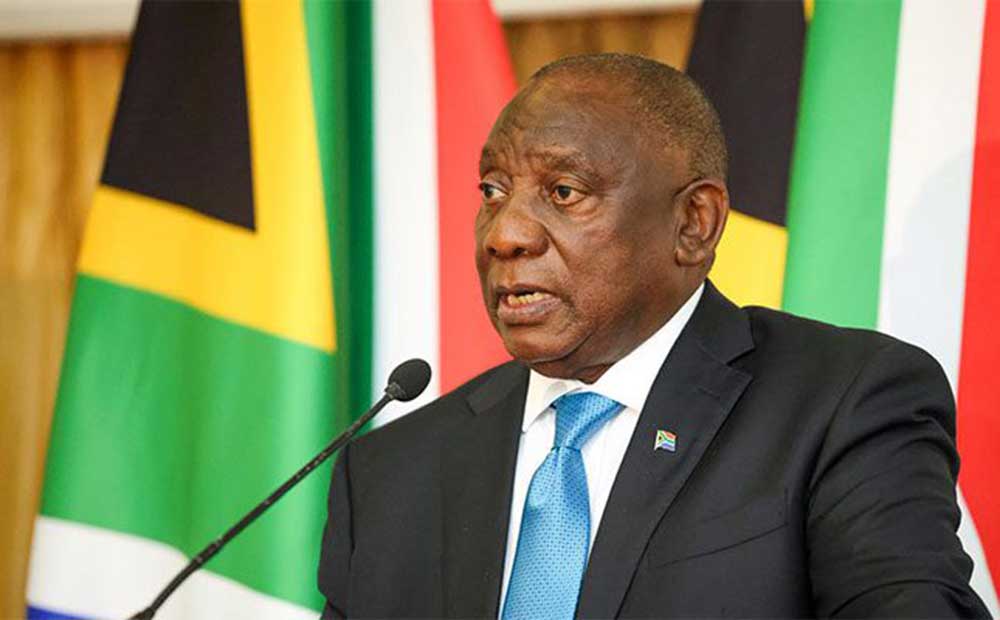
PRETORIA. South African President Cyril Ramaphosa has unveiled a newly constituted Presidential Climate Commission, marking a decisive recalibration of the country’s climate governance at a moment when energy insecurity, economic inequality, and climate pressure are converging into a single national test.
The new commission, appointed for a five-year term running from January 2026 to December 2030, replaces the inaugural body whose mandate concluded at the end of 2025. Its formation signals that climate policy is no longer a peripheral environmental issue in South Africa, but a central pillar of economic planning, political stability, and social justice.
Established as a statutory body under South Africa’s Climate Change Act, the Presidential Climate Commission is mandated to provide independent, evidence-based advice to government on the transition to a low-carbon, climate-resilient economy. Its recommendations are expected to influence decisions spanning energy reform, industrial policy, labour protection, and community resilience, areas that will define South Africa’s development trajectory over the next decade.
A COMMISSION DESIGNED FOR A JUST TRANSITION
The reconstituted commission brings together 25 commissioners drawn from labour, business, civil society, academia, youth formations, and traditional leadership. Their appointment followed a public nomination process launched in August 2025, reinforcing the view that climate governance must be inclusive if it is to be durable.
This diversity is not symbolic. South Africa’s climate transition is deeply political, with real consequences for jobs, energy prices, and regional economies built around coal. The commission is expected to act as a national convening platform where competing interests are negotiated openly, rather than resolved through unilateral policy shifts.
In announcing the appointments, President Ramaphosa emphasised the need for independent guidance that can help government navigate difficult trade-offs while building social consensus. Climate action, the Presidency has argued, must protect workers and communities historically dependent on carbon-intensive industries, even as the country accelerates its transition.
ENERGY, EMPLOYMENT, AND A HARD REALITY
South Africa remains one of the world’s most coal-dependent economies. Coal continues to dominate electricity generation and supports tens of thousands of direct and indirect jobs, particularly in Mpumalanga. At the same time, the country is increasingly exposed to climate shocks and remains under international scrutiny as a major emitter in the Global South.
The new commission enters office as load shedding, energy reform, and electricity pricing continue to dominate public debate. Its advisory role will be critical in shaping how renewable energy expansion, grid reform, and industrial diversification are sequenced to avoid economic dislocation and social backlash.
The stakes are amplified by South Africa’s participation in the Just Energy Transition Partnership, which brings significant international climate finance alongside equally significant expectations. Whether this funding translates into inclusive growth or deepens existing inequalities will depend largely on policy coherence and implementation, areas where the commission’s influence will be tested.
A SIGNAL BEYOND SOUTH AFRICA
Beyond domestic implications, the renewed commission sends a broader signal across Africa. South Africa has consistently positioned itself as a continental voice on climate diplomacy, arguing that developing economies require policy space, financing, and flexibility to pursue climate action without sacrificing development.
By embedding the commission in law and renewing its mandate, Pretoria reinforces the argument that climate governance must be institutional, long-term, and nationally owned rather than donor-driven. For other African states facing similar transitions, the South African model offers both a reference point and a cautionary lesson.
The commission’s work will also feed into South Africa’s posture in global climate negotiations, where debates around adaptation finance, loss and damage, and equitable transitions remain unresolved.
A FIVE-YEAR TEST OF CREDIBILITY
As the new commissioners assume office, expectations are high. The coming five years will likely determine whether South Africa can stabilise its power system, reduce emissions, protect workers, and restore investor confidence at the same time.
For President Ramaphosa, the appointments represent both political intent and policy risk. A credible and effective commission could anchor South Africa’s climate transition in social consensus and economic realism. Failure would deepen public scepticism about whether climate institutions can deliver tangible outcomes in the face of structural constraints.
What is clear is that South Africa has chosen to double down on climate governance at a moment when delay is no longer an option. The Presidential Climate Commission now carries the burden of turning ambition into action, and advice into impact, in one of the most complex energy and development landscapes in the Global South.