
Admin, ECO NEWS | November 23, 2025
China’s rapid rise as the world’s clean-energy powerhouse is reshaping global energy systems — and Africa is becoming one of the biggest arenas of that influence. Beijing’s dominance in solar, wind and battery manufacturing has allowed it to set the pace of the global renewable-energy transition, yet its continued dependence on coal complicates both its own climate ambitions and those of its partners.
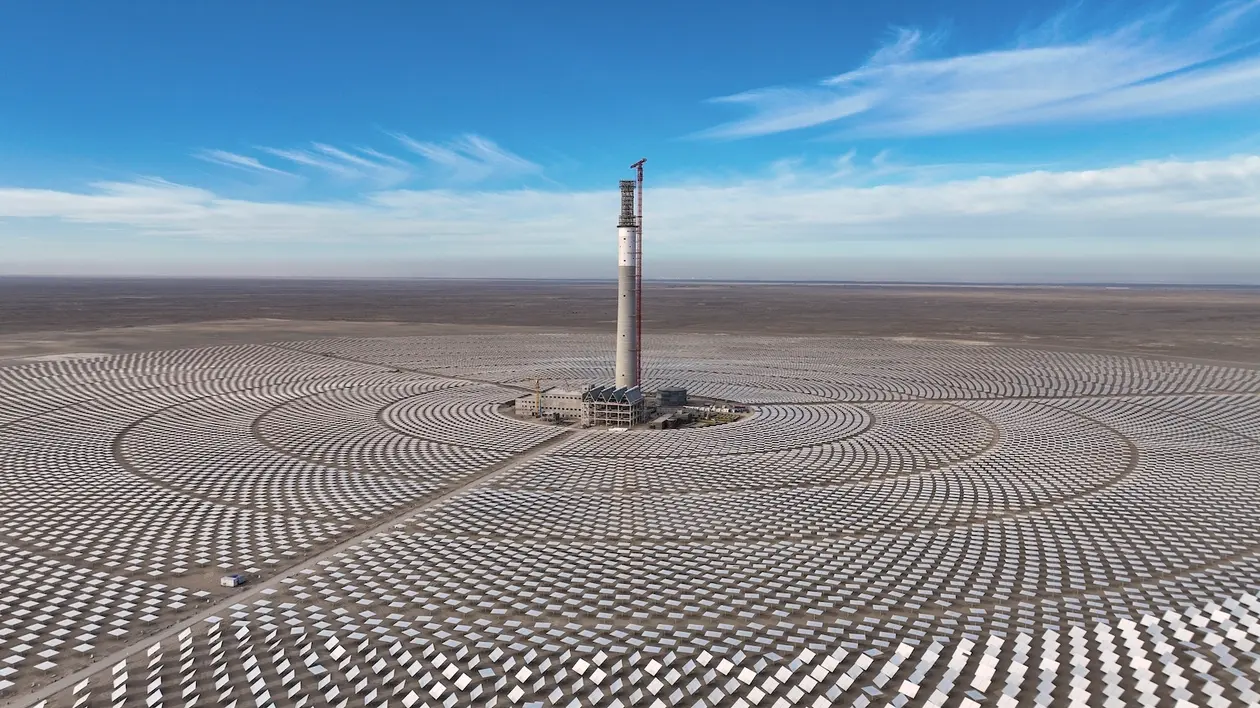
Over the past decade, China has built more renewable-energy capacity than any other country. It produces the majority of the world’s solar panels and batteries, making clean-energy hardware cheaper and more accessible across developing regions. This scale has pushed China ahead of its previous targets, putting it on track to exceed 1,200 gigawatts of renewable-energy capacity well before 2030. But despite the impressive installations, not all the clean power gets used efficiently. Grid constraints, regional inequalities and long-standing reliance on coal mean fossil fuels still dominate electricity generation inside China. The contradiction is clear: the leading builder of renewable energy remains one of the largest emitters, and its internal grid struggles limit the full impact of its renewable boom.
Africa, meanwhile, is increasingly central to China’s global clean-energy footprint. With more than 600 million Africans lacking reliable electricity, the continent represents both a developmental need and a major investment opportunity. Chinese companies and financiers have moved swiftly, and by 2024, an estimated 59 percent of China’s new energy investments in Africa were channelled into wind and solar projects worth over US$66 billion. Imports of Chinese solar panels have surged to record levels across East, West and Southern Africa, driven by affordability and availability. Major installations, such as Kenya’s Garissa Solar Plant and new hydropower expansions supported by Chinese engineering, highlight how China is shaping Africa’s energy infrastructure on the ground.
For Uganda and the broader East African region, China’s push brings clear advantages. Affordable solar hardware, battery storage technologies and financing for energy infrastructure offer a pathway to accelerate renewable-energy adoption. However, experts warn that the benefits must go beyond equipment imports. Many large-scale Chinese-supported projects create limited long-term local jobs or manufacturing capacity, meaning African countries risk becoming buyers rather than partners in the global energy supply chain. Additionally, although renewable investment is rising, Chinese financing for fossil-fuel projects has not disappeared entirely, raising concerns about uneven energy transitions.
Uganda can maximise the opportunity by strengthening its grid, investing in storage systems, training local technicians and adopting regulations that favour renewable energy over fossil-fuel alternatives. Regional power-pool integration will also be critical to ensuring that clean power, once generated, can be efficiently transmitted and used across borders.
China’s expanding role in Africa’s energy transformation is not purely economic — it is also geopolitical. Clean-energy partnerships help deepen China’s ties across the continent while securing access to strategic minerals used in batteries and other technologies. African governments will need to balance these relationships carefully, ensuring that national interests, environmental sustainability and local economic development remain at the centre of energy planning.
As the world pushes toward a low-carbon future, China’s outsized influence will shape the pace, cost and direction of the transition. For Africa, especially Uganda, the moment presents a rare chance to leapfrog into a clean-energy era — but only if the continent moves strategically, builds local capacity and ensures it is not just a consumer in the new energy economy, but an active player.