
By Zoe Mbejja | EcoNews, By Ecomedia Limited | November 10, 2025
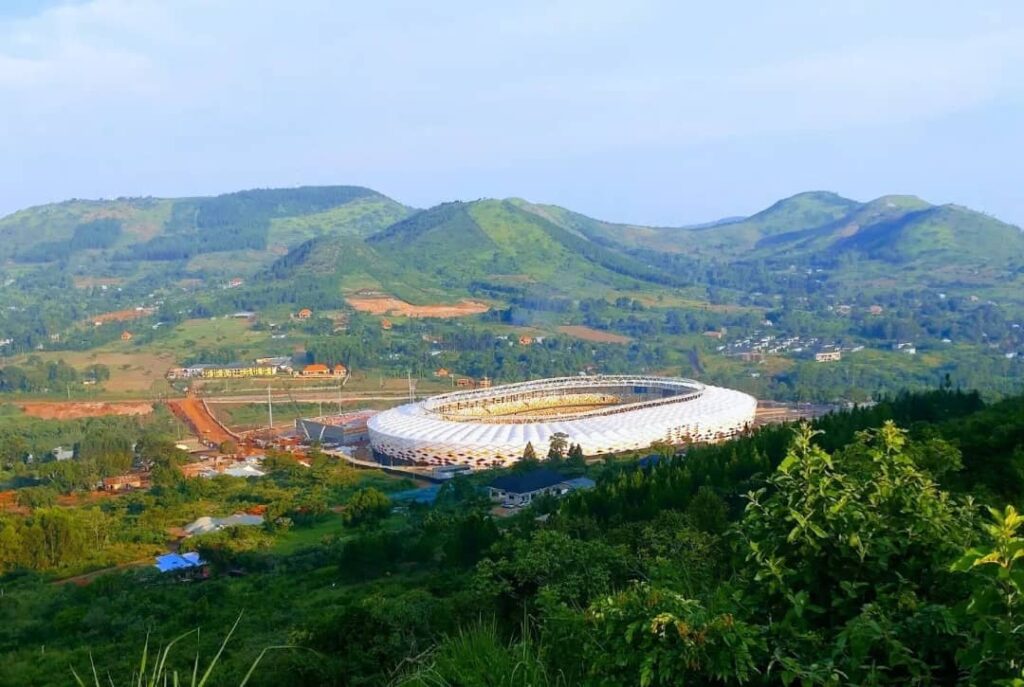
The newly completed Hoima City Stadium stands as a symbol of modern sports infrastructure and environmental accountability in Uganda’s oil-rich western region.
Located in Mparo Division, Hoima City, the 42-acre project faced environmental scrutiny in mid-2024 when construction briefly halted following concerns of wetland encroachment. Local environmental engineers accused the contractors, SUMMA, of extending part of the stadium perimeter into a protected wetland zone.
The issue triggered an inter-agency meeting involving NEMA (National Environment Management Authority), local government leaders, and the project contractors. Following discussions and environmental review, the dispute was resolved, with NEMA reaffirming the need to uphold Environmental, Social, and Governance (ESG) principles throughout construction and future stadium operations.
Before construction began, a Turkish feasibility study assessed environmental impact, energy requirements, and road accessibility ensuring the design aligned with Uganda’s green building commitments.
As of October–November 2025, construction is complete ahead of schedule featuring a hybrid grass pitch, a swimming pool, and multi-sport facilities designed for international standards. Although specific mitigation details have not been publicly disclosed, authorities confirm that the environmental concerns were addressed before completion.
The project demonstrates a growing balance between development and environmental stewardship, a critical standard as Uganda expands its sports and urban infrastructure. Hoima, positioned as a strategic economic hub for the oil and energy sector, now showcases how urban expansion can proceed responsibly with climate and ecosystem awareness.
Experts view the stadium’s environmental compliance as a lesson in policy integration, where adherence to national environmental laws not only prevents degradation but also enhances public trust and international reputation.
Across Africa, similar urban projects are facing scrutiny over wetland preservation and sustainability planning. Uganda’s approach with Hoima City Stadium reflects a broader trend of governments integrating climate resilience and ESG accountability into development frameworks.
The stadium, now a modern landmark in western Uganda, reinforces that economic progress and environmental protection can coexist if guided by science, transparency, and strong institutional collaboration.
EcoNews | By Ecomedia Limited
Informing, Educating, and Inspiring Climate Action — For People, For Planet, For Prosperity.