
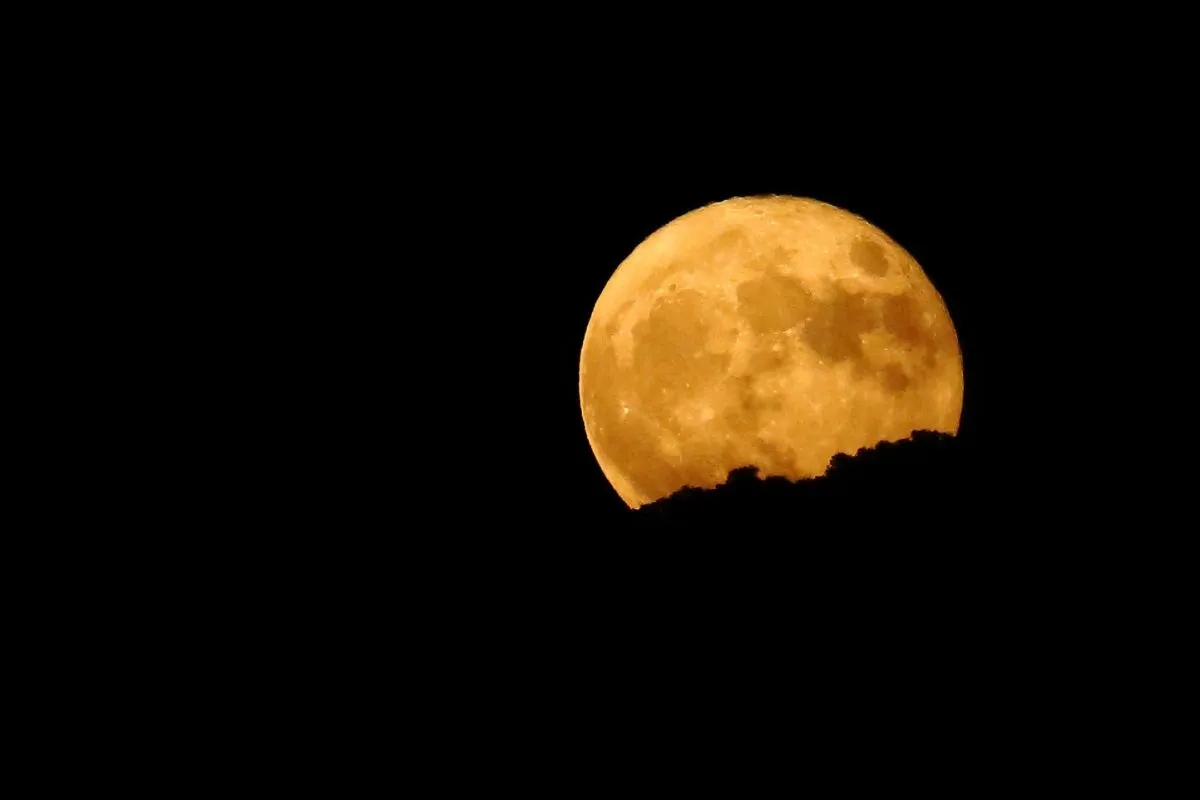

As the Beaver Supermoon rises this week, the biggest and brightest of 2025, sky watchers and environmentalists alike are pausing to ask: Is nature trying to remind us of something?
This rare celestial spectacle will occur on Wednesday, November 5, 2025, when the moon reaches its perigee, the closest point to Earth in its orbit, at just 356,980 kilometers away. The result is a glowing orb up to 14 percent larger and 30 percent brighter than a normal full moon, bathing the world in an unusually brilliant silver light.
The November full moon, known as the Beaver Moon, carries deep natural symbolism. In Native American and early settler traditions, it marked the time when beavers repaired their dams in preparation for winter, a symbol of nature’s resilience and foresight. In many African cultures, too, the full moon is a period of reflection, storytelling, and renewal, a bridge between people and the rhythms of the environment.
Across parts of Africa, environmentalists are using this supermoon moment to draw attention to the fragile balance between humans and nature. From drying wetlands in Uganda and Kenya to erratic weather patterns in the Sahel, the moon’s calm light contrasts sharply with the environmental turbulence below.
“This is not just a lunar event; it’s a mirror of Earth’s condition,” says Dr. Amina Olayinka, an environmental scientist based in Lagos. “The same forces that shape the moon’s orbit — gravity, rhythm, balance — are what keep our ecosystems stable. But right now, that balance is being tested.”
Interestingly, scientists note that tidal variations tend to be more pronounced during supermoons, subtly affecting coastlines and marine life behavior. In some regions, farmers also link such moons to cycles of soil moisture, fish migration, and crop patterns, blending science with centuries-old ecological wisdom.
For observers in Uganda, Kenya, Tanzania, and beyond, the moon will rise shortly after sunset, offering a radiant display over the eastern horizon. Astronomers suggest finding open spaces with minimal light pollution, such as lakeshores, hills, or savanna plains, to experience the supermoon’s full majesty.
And while cameras may capture its glow, the deeper reflection may be inward: What does this extraordinary natural event say about our place within the living system we call Earth?
Perhaps, in this vast sky, the Beaver Supermoon is not just shining, it is reminding humanity to look up, slow down, and listen to the planet it lights.